28 Oct 2013

Round houses and mud chairs


I went up to Gulu last week, which is in the north, where the LRA (Kony and his mates) and the Ugandan Army did some very, very terrible things. But let's not just define the place by it's post conflict status - it was a really great place to visit and is doing well at getting back on its feet.

We spent two days 'in the field' out in Amuru (about 2 hours each way on very potholed and slippery roads). The homes were all like those above and the compounds were exceptionally clean and tidy, I did feel a bit of a slob when I imagined how they might react if they came round to ours - even though it's actually pretty good (you do a great job Sue!). My main reason for going was to find out about mud furniture and a bit more about groups and how they work well together, so we had lots of questions and listening to do.

I was also there to make a video about building a chair out of mud and bricks so that I could a) show it to the people in the slums where we work b) share it with the world on Youtube and c) make a bit of money by doing it for Send a Cow - fair enough eh? Making the video was simple as we worked with Jennifer, her friend and Andrew (below), who were really great and let me boss then around to help me get the right shot - which isn't easy when there is harsh sunlight outside and darkness inside their homes. Isaac King and I surprised ourselves by actually feeling really sad when we'd all finished up at the end of the day, that's how nice they all were (Isaac also said that he would like to spend a holiday in one of the huts, which I'm sure we could arrange).


So, because of the light I decided on a photo-video as it would have been too blurry otherwise. If you want to know how to make one of these beautiful items of furniture then watch this and you'll be rolling up the carpet and getting bricks from the garden quick sharp.


Or just take a look at these beauties...


11 Oct 2013

Mud up north

Next week I'm heading 'up north' to a place called Amuru. Unlike going up north in the UK, this trip doesn't involve extra rain and extra eyeshadow, but it does involve strong accents. Why the 5 hour drive? Well, there's a group of Send a Cow farmers there who have been innovating in making all sorts of household furniture out of mud and a few sticks. I must admit, I've no idea how they do it so well, but that is why I'm heading up.

I'll also be gate-crashing the Send a Cow Social Development meetings, which will give me a really good idea on how to help groups increase their resilience to shocks, change and challenges - which we all know come our way in life. I'll be updating when I return, for now, here are some pictures of the kind of things these groups make. Maybe you'll start seeing them in IKEA soon?


For those who like maps like I do, here's a  map...


1 Oct 2013

Rain, rain

We are all anticipating some heavy rains over the next few months. For us, this will just mean coats on and a few slips in the mud, but for many in the slum communities it means flooded homes, cold nights and sick children.

It's not something that can change overnight, but it is something that we can work with the communities on; helping them to adapt their housing and run off trenches as well as trying to get in touch with the local council so that they can do their bit too.

I made this little video to show the impact of just one mornings' rain so that if I do meet up with a local political bod, I can whip my phone out and show them this...


22 Sept 2013

Expect the Unexpected!


Before we moved to Uganda, when we were  just in the preparation stage, we were given a prophetic word from a friend that we should expect the unexpected. This has been true over and over again here. This has definitely been true of our journey into school life. Back at school in the UK, I remember a colleague asking me if I would get a teaching job in Uganda. I answered very strongly that no I wouldn't be and had no intention of working in a school. I also was fully expecting to be homeschooling the girls for at least the first year. Well things aren't always as you expect and I am now working in an international school (2 days a week) and the girls are attending the school 3 days a week.
It has been a beautiful journey and has God's blessing all over it! The first few months homeschooling went really well and the girls loved having so much time to play and enjoyed the schooling part, but it soon became obvious that they were desparate for friends of their own age and something more.  School fees for international schools here are really high so God seemed to have it all sorted that I could work for a couple of days at the school (which I love doing) in exchange for school fees. The school we found has just 60 kids in it from 3 - 11 and the largest class has only 15 children in it. In Ava's class of 12, there are 10 different nationalities, making it truly international. Mayah has settled in really well and loves her teacher and classmates and the small setting suits her down to the ground. It is such a joy to hear her chat so happily about school and to be so settled there. She even gets to do ballet as an after school club! Ava also loves school and participates in all activities with enthusiasm!. She has made some really strong friendships.


The other totally unexpected part of all this is my role in the school. I am overseeing the early years class (3 - 5's)! My experience in teaching has mainly been with 9-11 year olds. However, God's grace has totally been on me and I have really enjoyed this new challenge, especially having the opportunity to shape how the early years class operates. Working with an amazing Ugandan teacher and lovely Dutch lady has also been a joy.
Before we came, we felt really strongly that God would take good care of our children, that he wouldn't call us to work here and then abandon our girls. I am so excited to be able to testify to God's goodness that he really has taken care of the girls. It has been a journey with some homesickness and tears, but they have now developed strong friendships with 3 or 4 children each, are loving school, generally are enjoying life and will openly talk about how they are happy living here.
I am sure there will be many more trials to come but I trust God that he will continue to look after our girls and fill their lives with blessing.


18 Sept 2013

The must-have, miracle tree Moringa

Anyone who has spoken to me recently has probably heard me mention something about this special tree.

There's a lot that can be said about it, but to be brief, here are some pictures and a few words to give an idea as to why this tree now has a special place in my heart.

Let me introduce my personal (2 and a half month old) tree. They grow really quickly and in poor soils and as my mission is to replicate what is going on in the slums in mini-tests, this one is growing in a large water bottle. 


 So, what's so special about this tree? Well, there is almost too much to say. It has so many nutritional benefits, here are just a few:


It's used around the world and grows very well in the tropics - basically it grows in just about all of the countries where malnutrition is a problem. Handy eh? Also very handy is the fact that after doing some research and wanting to find a Moringa expert locally, it just so happens that one lives next door! He even helps publish book about the tree.

I'm not saying it definitely does all of the things below, but sometimes the wisdom of generations past can know best.


My plan is to trial growing Moringa in the slum communities, on roof tops in pots, in old jerry cans and water bottles. One great bloke called Fred is very keen on trying out some new ideas and so I'll be putting some pictures up soon of his home in the slum with pots on top and around the sides. I want to go slowly and carefully though, as the government tried to popularise Moringa a few years back and sold the idea as a get-rich-quick crop, but there was no market for it as people were not aware of it's many benefits. That's where we'll start - with telling people why it's so good.

If you want more info and a bit of hard evidence to back up some of these claims, try this site out.

Oh, and you can use the seeds to purify water too.....


29 Aug 2013

Words of wisdom - by John

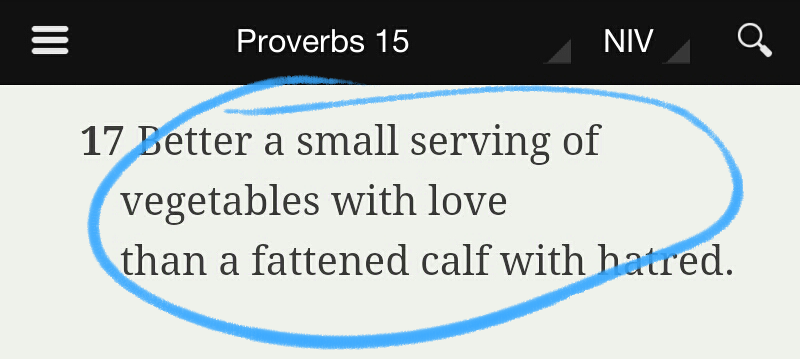
I've been enjoying some proverbs again recently and so here are a few that have made me stop and think about how we do things here. Hopefully they will make you pause and ponder a bit too.


This is an interesting one. It's obviously not good to help people in need so that you get a reward, but the idea that we are 'lending' to God when we help people is quite an eye-opener.


This one challenges my perceptions of development. We assume that it's all about having clean water, making money and improving conditions. Well, it is those things, but if there is no love in the heart or the household then aren't we missing the point?


Ok, seems obvious really. But this scary one reminds me that there are probably ways in which we all oppress the poor without realising it. Although it's not intentional that we buy products and services that oppress the poor through poor wages and conditions, we are still active in the system that exploits people. And I'm not sure if those who are oppressed really care whether we meant it or not, they just want it to stop.


Another development related one. How? Well it seems that many NGOs have the 'answer' to issues, problems and a communities' concerns well before they listen to the people they aim to help. It's so easy to do and, of course, you can only help in ways that you are skilled in. But I'm really keen to listen as much as possible before coming up with a list of answers to everyone's problems.

Hope there was a good slice of food for thought for you there too!

16 Aug 2013

Keeping clean - by John

Just a quick update here. It's been really busy with lots of visitors to the team on a 'Missions School'. I say visitors, but some are actually from the slum communities so we are their visitors really.
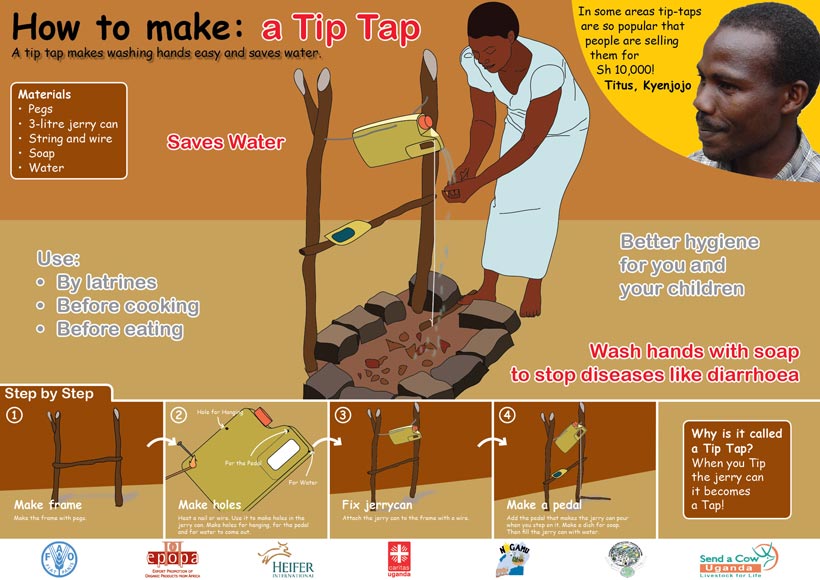
One of the things that we tried out with the team was making 'Tip-Tap' handwashers. These are made out of sticks, string and a bottle and so barely cost a thing but keep hands clean. The cleaner the hands, the less likely disease is to spread.

Here's one that our friend Charles helped to make in one of the slums. Part of the test is to see how long it lasts. It may be that the wood finds a new home in a fire and the bottle makes someone a nice water carrier - we'll wait and see!


You may notice that we have two posters on this toilet too. And if your eyesight is commando-like you'll see that one is in English and one Luganda. Part of the plan is to popularise techniques like this through posters etc. Maybe soon I'll be blogging about a giant Tip-Tap mural on this wall, that's if the tap itself stands up to pilfering hands.